
Karcher K2 Full Control Home
A practical pressure washer that makes light work of outdoor cleaning around the home.
It's tempting to buy the most powerful pressure washer you can, but more isn't always better - too much pressure can damage surfaces, and you'll rarely use the maximum. Here's how to match pressure to the job.
Pressure is measured in bar or PSI (about 14.5 PSI per bar). As a rough guide: around 100 bar cleans cars, garden furniture and light grime; 110-130 bar suits most patios and general home use; 130-150 bar and above tackles big driveways, ingrained moss and frequent heavy jobs. Flow rate (L/h) matters too - it's the water volume that rinses dirt away, so a good flow helps clear large areas quickly.
Very high pressure used carelessly can chip car paint, strip wood, erode soft pointing and blast the jointing sand out of block paving. You also can't use full power on delicate jobs, so a huge figure is wasted much of the time. For most homes, a mid-range machine with an adjustable lance and a patio cleaner head is more useful than raw pressure. Buy the power you'll actually use, and control it to the surface.
A practical pressure washer that makes light work of outdoor cleaning around the home.

A practical pressure washer (110 bar, 360 L/h) that makes light work of outdoor cleaning around the home.

A practical pressure washer (110 bar, 360 L/h) that makes light work of outdoor cleaning around the home.
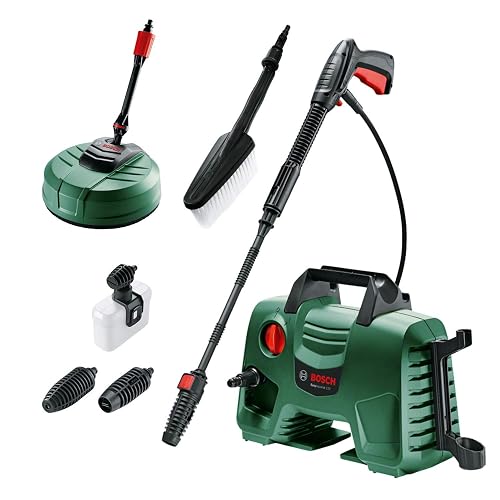
A practical pressure washer (350 L/h) that makes light work of outdoor cleaning around the home.

A practical pressure washer that makes light work of outdoor cleaning around the home.

A practical pressure washer that makes light work of outdoor cleaning around the home.
For home use, no. That's commercial-level pressure that can damage softer surfaces. Most households are well served by around 110-150 bar (roughly 1,600-2,200 PSI), used with an adjustable lance to suit each job.
Around 110-150 bar covers most home jobs - cars, patios, driveways and furniture. Go higher only for large areas or regular heavy-duty cleaning, and always dial the pressure down for delicate surfaces.
Our top pick is the Karcher K2 Full Control Home (our score 9.6/10) - A practical pressure washer that makes light work of outdoor cleaning around the home..